Prologue — when energy learned to draw
There is no single honest date for ‘the first image made by electricity’. The story is a chain. Photography fixed light chemically in the nineteenth century. Cathode-ray tubes later made electrical signals visible. Television turned images into signals that could travel. In Britain, John Logie Baird publicly demonstrated television in 1926 and, in 1927, recorded television images as electrical signals on gramophone discs — Phonovision. By the 1930s, electronic cameras and cathode-ray systems were turning the moving image into an electronic medium.
Then the signal itself became a drawing instrument. In 1952, mathematician and artist Ben Laposky photographed waveforms generated on an oscilloscope. His Oscillons are among the earliest works recognised as electronic/digital art: mathematics, voltage, light and photography becoming one image. That gesture matters here. The machine was no longer only reproducing reality; it was participating in visual composition.
Cinema had already taught the world to feel through sequences of images. Silent cinema proved that image, rhythm, gesture, typography and editing could carry emotion before synchronised dialogue became normal. Television carried moving images into the home. Electronic music did something parallel to sound: oscillators, tape, synthesisers, sequencers and computers made electricity itself part of the instrument.
When the machine entered the record sleeve
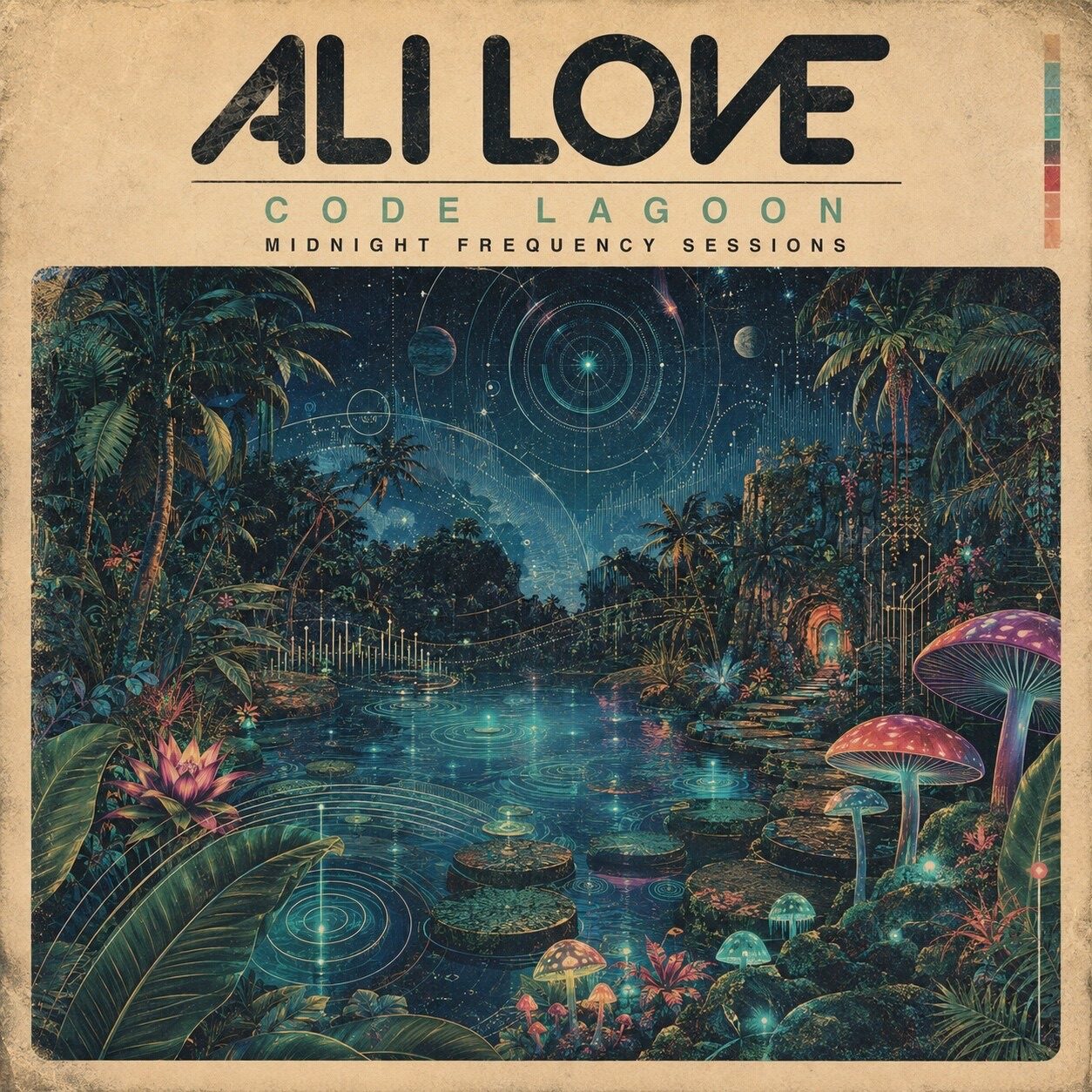
The record sleeve became the meeting place. Kraftwerk made the computer not merely a production tool but a subject and aesthetic. New Order and designer Peter Saville pushed machine logic into graphic identity: the 1983 Blue Monday sleeve was built around the visual language of a floppy disk, while the related Power, Corruption & Lies system encoded information through colour. In 1986, computer artist Rebecca Allen created digital portraits and artwork for Kraftwerk’s Electric Café / Techno Pop era; MoMA now holds that album-cover work in its design collection.
These works did not make music less human. They expanded the vocabulary around it. Programmers, engineers, mathematicians, animators, typographers, photographers, filmmakers and musicians became part of the same cultural lineage. The screen met the synthesiser; code met the record; computation met the dancefloor.
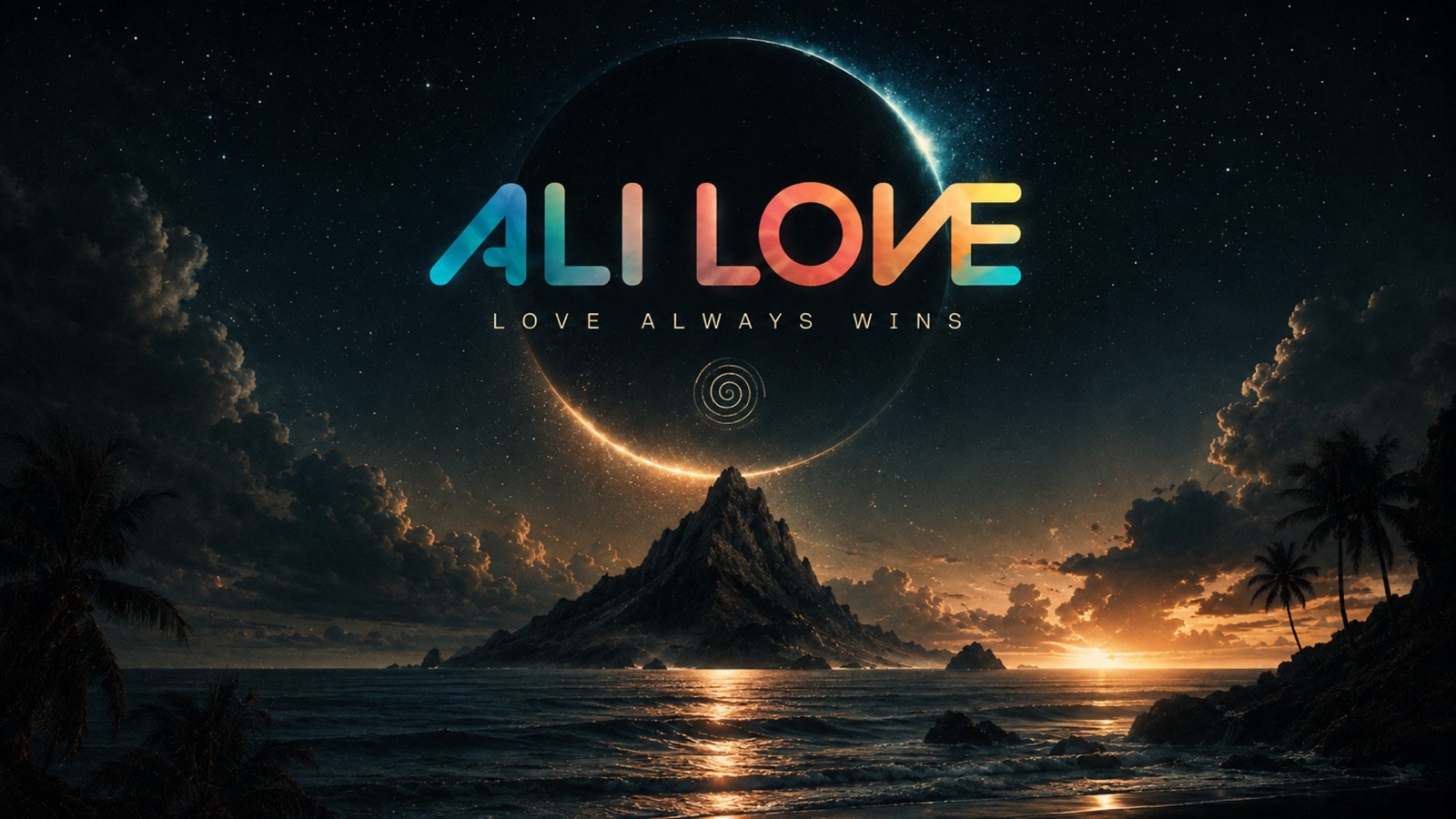
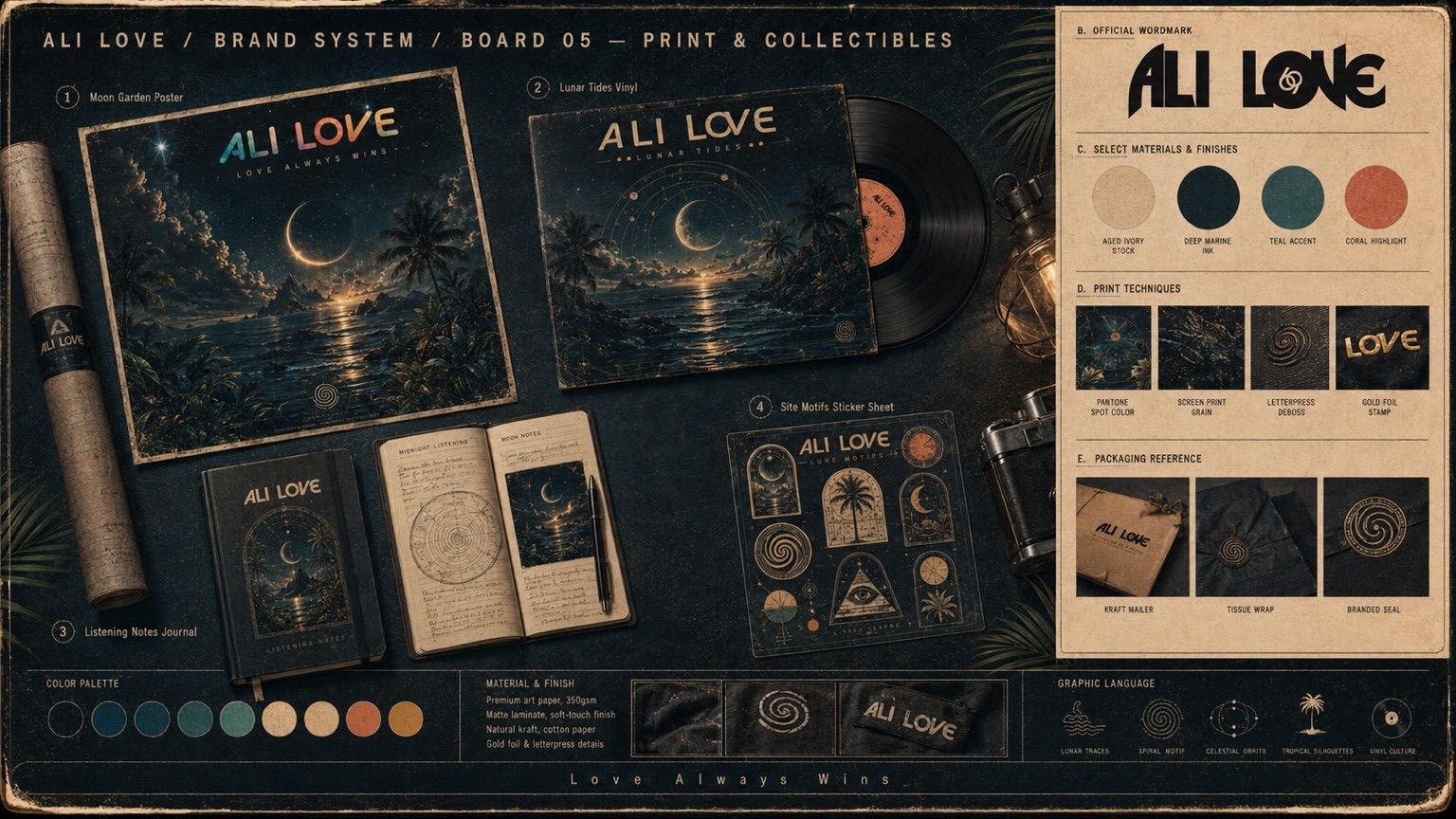
Ali’s own catalogue sits naturally inside that continuum: soul and voice against machines, house music beside psychedelia, analogue references beside contemporary production. This editorial does not claim that every historical influence was consciously quoted in every release. It reads the shared visual language: cosmic geometry, coded symbols, vinyl culture, nocturnal rooms, ritual, repetition and the tension between technology and human warmth.